Services
Feeding Support
Feeding Support helps infants and children who experience difficulties with eating, swallowing, oral-motor skills, or mealtime behaviours. Early support can make a meaningful difference to a child’s growth, development, and family wellbeing.
What is Feeding Support?
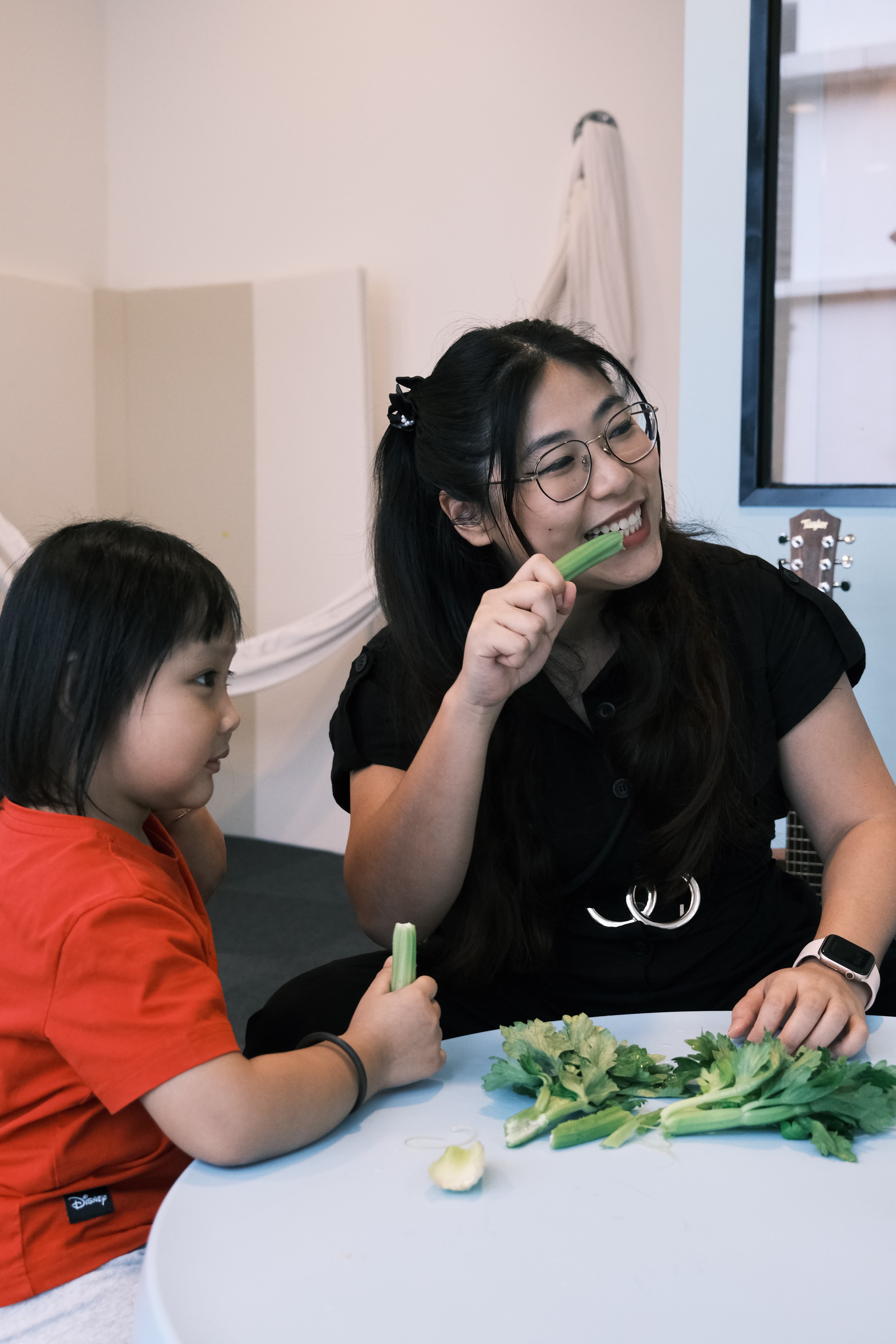
Feeding Support helps children who experience challenges with eating safely, comfortably, and confidently. Feeding difficulties can affect nutrition, growth, emotional regulation, and family stress levels — making early intervention especially important.
Our approach is gentle, developmentally informed, and child-led. We focus not only on food intake, but also on safety, sensory comfort, oral skills, and building positive mealtime experiences.
Feeding Support is not about forcing children to eat — it is about helping them feel safe, curious, and confident with food.
Who Can Benefit from Feeding Support?
Feeding support may support infants and children with:
- Feeding aversion or refusal
- Limited food variety (picky eating)
- Oral-motor difficulties
- Difficulty chewing or transitioning textures
- Sensory-based feeding challenges
- Poor weight gain or prolonged feeding times
- Premature birth or NICU background
- Tube-fed infants transitioning to oral feeding
- Developmental delay or neurological conditions
How Feeding Support Helps
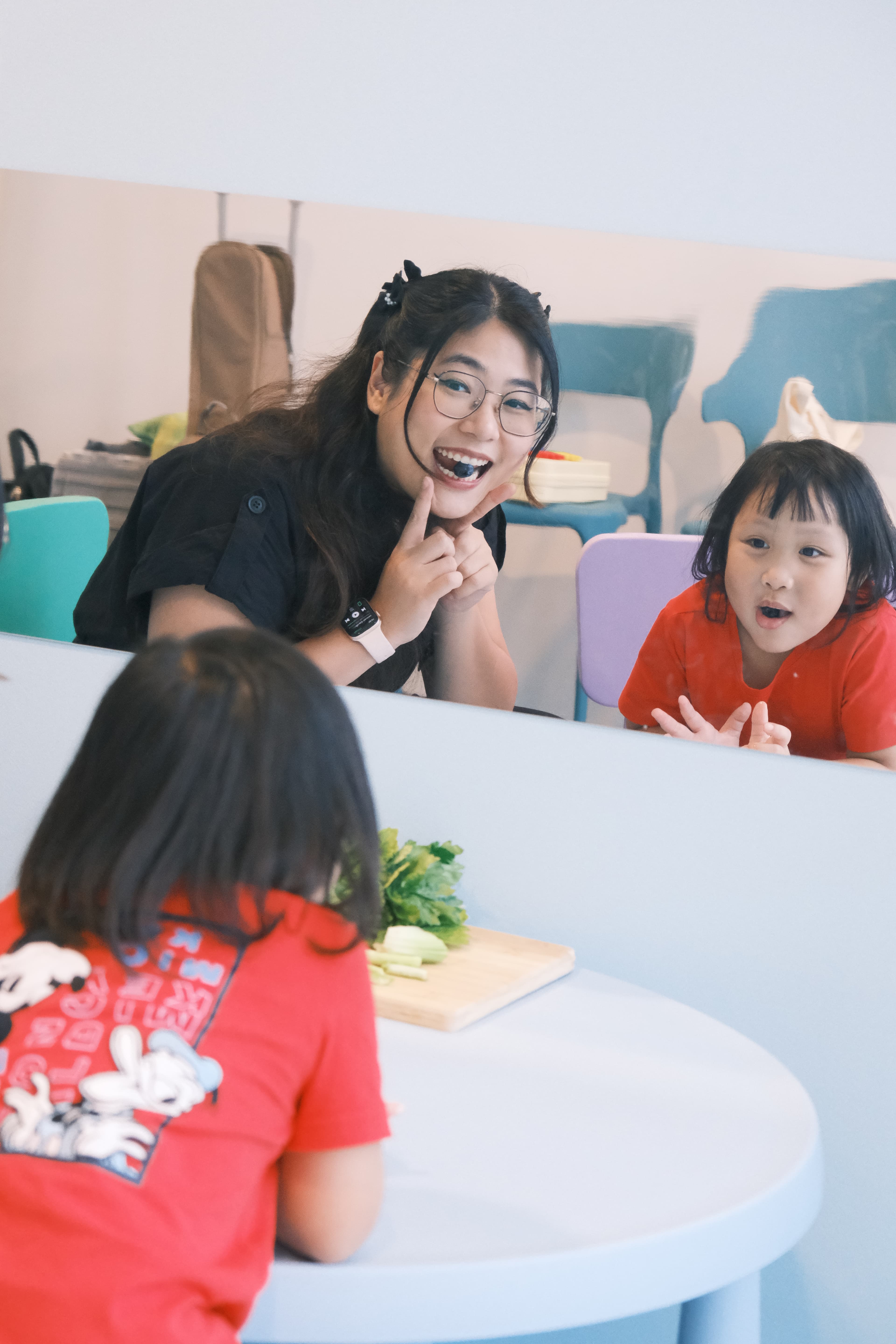
Improve oral-motor strength and coordination
Reduce stress, fear, and aversion around food
Increase acceptance of textures, tastes, and food variety
Build positive and predictable mealtime routines
Support parent confidence and understanding
Sessions may include play-based oral activities, sensory exploration, caregiver coaching, and developmentally appropriate feeding strategies.
About Our Feeding Therapist
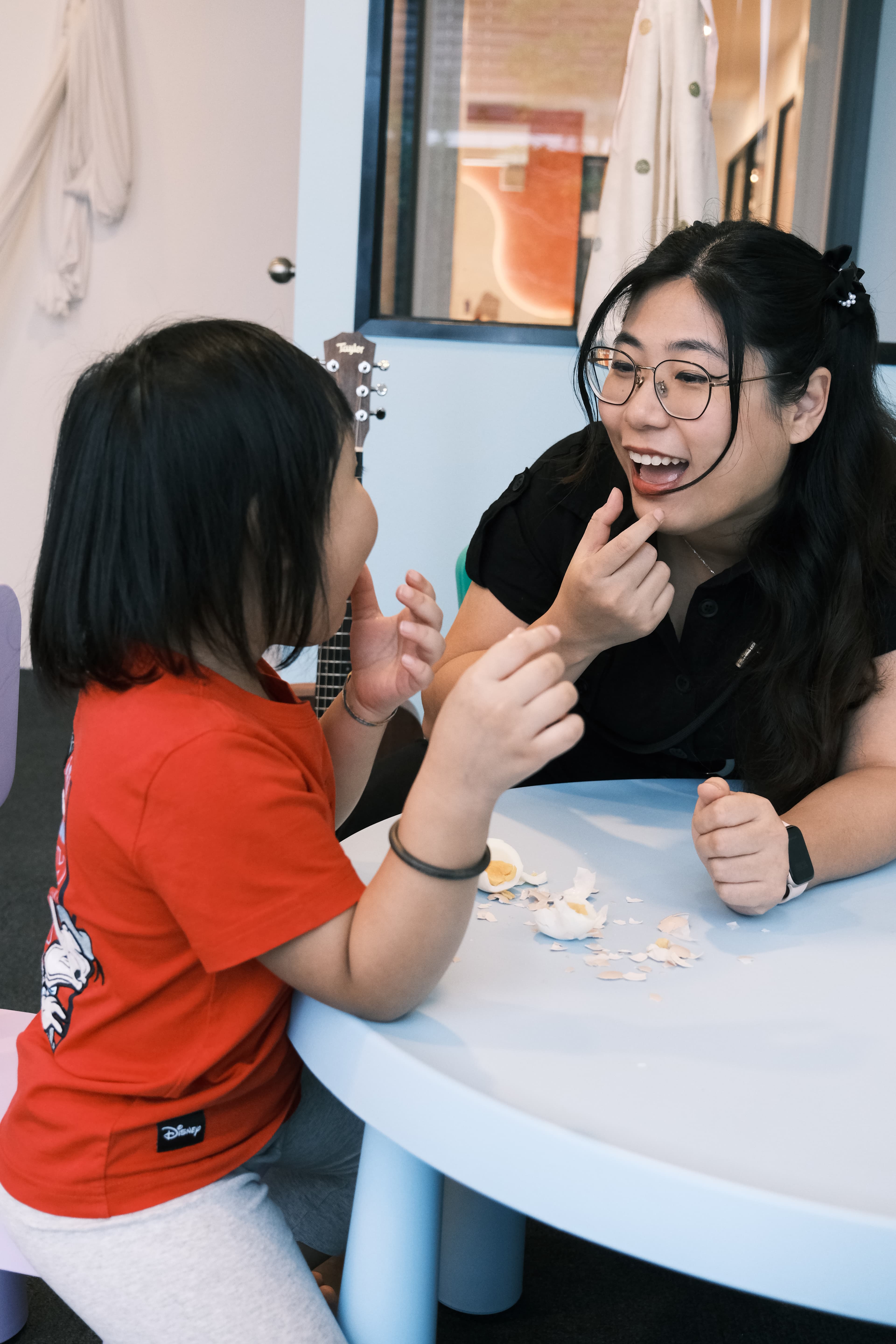
Sandra Cheah
Sandra Cheah is a paediatric feeding therapist who works with infants, medically complex children, and picky eaters. She combines the Advanced SOS Approach with Music Therapy to support oral-motor skills, sensory regulation, and feeding independence through playful, music-based activities.
She has extensive experience in Neonatal and Paediatric Intensive Care Units, supporting premature infants and medically complex children who may develop oral aversion due to prolonged medical procedures or tube feeding.
Sandra has conducted IRB-approved research at UCLA on music-based interventions to enhance non-nutritive sucking (NNS) using the Pacifier-Activated Lullaby (PAL), supporting the development of the suck-swallow-breathe mechanism.
Her work is trauma-informed, family-centred, and collaborative — supporting children to gain confidence at mealtimes and discover new foods at their own pace.